Timeline

The story of Just, starting from day 0, before the idea even had a name. Every decision, shift, and signal that made it what it is.

2026
May 20Wed15 days
Paper-cut timeline rail assembling product memory from tasks, docs, and history blocks

I turn two years into a timeline

Sixty events, each with its own illustration. This timeline can be read in chronological order or in reverse, whichever feels better. A few days of work, already against the background of first interviews.

  • While putting it together, I rethought a lot. I do not regret a single decision. The idea of working for myself again is now planted too deeply to disappear.
  • I invite you to live through these two years with me. Maybe you will find something useful here for yourself too. Though one thing I have already learned is that other people's experience rarely teaches enough on its own, and most things still have to be tested firsthand.
  • Think of it as a window into what solo AI product building actually looks like, with the tasks, the decisions, and the dead ends included.

May 5Tue10 days
Paper-cut growth card blocked by a verification barrier and stalled channel

Google verification: 30 days and counting

Everything is ready for Google Ads except for one detail: Google does not believe my company is actually called AI Apps.

  • Under Google's rules, there are two ways to verify a business name: provide trademark documents or use the domain name. I chose the second path and ran into complications I did not expect.
  • For the fourth Monday in a row, the same email arrives: 'we're working on it, another 3 to 5 business days.'
  • You never know in advance where the process will stall. This time it stalled here. So I wait.
Apr 25Sat1 day
Minimal paper-cut empty wallet motif with a repeated cycle suggesting the same stopping point again

Money runs out again. Another full stop.

January through May. Four and a half months. A major product pivot, dozens of experiments, and a lot of hard-earned experience in distribution, video, and AI-agent workflows. I am satisfied.

  • The last decision of this iteration is to gather the whole story into a timeline on the site.
  • What comes next is work search, interviews, and reflection: what worked, what did not, and what I would do differently.
  • There are already thoughts about the next turn. But first, I need stability.
Apr 24Fri1 day
Paper-cut public discussion thread with a signal card, moderation friction, and warning cues

Two polls, two bans

I go to Reddit for data. I get the data. I also get both bans.

  • In r/jira, I run a poll about clarification overhead around tasks. Twenty votes produce a useful picture: for most people, more than 10% of work time disappears into everything around tasks, and for some it is close to half. A moderator decides it is advertising. Ninety-day ban.
  • In r/polls, I get 179 votes. Seventy-one percent say they do not use AI on principle because they do not want slop. A great snapshot of how the average Reddit user feels about AI. Permanent ban: a moderator decides I am a bot. The evidence? Long dashes. Support never replies.
  • I am happy with the experiments. The pain point is confirmed. The channel is not.
Apr 23Thu7 days
Paper-cut stack of article cards linked to search, globe, and AI discovery cues

A week later, the blog is live

Not ads, content. A person looks for an answer, finds an article, and the product is already there inside the path.

  • Everywhere, the product placement stays soft, with links to other articles too. Not 'buy this', more like 'interested? here is more.'
  • A couple of hours per article: images, editing, translation. The first pass covers the basic circle of questions and turns into more than a hundred SEO pages.
  • I give the experiment a month and watch what happens.
Apr 16Thu4 days
Paper-cut blog article expanding across many languages into a long-tail global discovery channel

I add a blog: a bet on SEO and GEO

If I cannot pour full energy into the product, I need channels with a long tail. A blog is the obvious choice.

  • I want to write articles that are genuinely useful and still index well, not just content for the sake of content.
  • Like the rest of the site, it all launches in 13 languages from day one. One article turns into 13. It sounds like a good idea. Later I learn that translating articles burns more tokens than writing code.
  • This is a bet on time, not reach. One strong article can keep bringing traffic for years.
Apr 12Sun9 days
Paper-cut product story card spreading into community post, essay, and video channels

The first public posts about the product

The first attempts to tell the story for free, through communities and articles.

  • A spotlight in Atlassian Community gets the product into Atlassian's partner-product newsletter.
  • A Reddit post goes into a product megathread, partly for SEO. I had also read that AI models learn well from Reddit, so I wanted to leave a trace there too.
  • A Medium article becomes the first real test of a proper article format. That one is for SEO too.
Apr 3Fri2 days
Paper-cut landing page with localization and discovery blocks for acquisition

A site in two days

The site was originally meant for several products. Now I rebuild it around one: Just.

  • From scratch: a hero section with the demo launching right from the page, a showcase of use cases, a pricing calculator, an AI provider block, and contact points.
  • I build it properly from the start: localization into 13 languages and all the search essentials: canonical URLs, hreflang, robots.txt, sitemap, JSON-LD.
  • That was exactly what had been missing before. Now Google Ads, SEO, and GEO all become possible. One day I may split the site back into several products, but only after those products actually exist.
Apr 1Wed4 days
Paper-cut search-intent path blocked by a marketplace page and redirected toward a real owned website

Google Ads vs marketplaces

If LinkedIn does not work, I need a different channel. Google is more interesting because it is not cold outreach. It is a meeting with someone who is already looking for a solution.

  • I open Google Ads, start setting things up, and hit a limitation: an Atlassian Marketplace page does not count as mine. The domain belongs to someone else, so the campaign will not pass.
  • The marketplace is good for organic discovery, but paid traffic needs a domain I actually own.
  • Which means I need a real site. That becomes the next step.
Mar 28Sat1 day
Paper-cut short demo screen with a trimmed video timeline and faster ad-ready pacing

A 25-second demo in one day

The full founder demo runs about six minutes. Interesting, but too long for ads. In one day I make a short 25-second version.

  • The previous video took two or three weeks. This one takes a day.
  • Same product, different tempo: a short format for ads and the landing page.
Mar 27Fri1 day
Paper-cut paid traffic funnel showing many ad clicks, weak visitor quality, and failing economics

A second LinkedIn Ads test

The day after the big release, I run one more quick LinkedIn Ads test just to see what changed. Nothing did.

  • I stupidly forget to disable LinkedIn Audience Network and end up with 120 visits that all show zero seconds on site in Google Analytics. That kind of traffic is useless to me.
  • Ads shown directly inside LinkedIn look somewhat better, but still grim: CPM around $42, CTR around 0.3%, CPC around $15.
  • Even if I pushed it down to $5 to $10 per click, it would still be too expensive for a first-pass test. The economics do not work. Time to look for other channels.
Mar 26Thu39 days
Paper-cut insights panel surrounded by visible source cards and provenance groups

I separate data by Jira project

A piece of technical debt had been there since day one: one shared data layer for the whole plugin. I knew about the limitation from the very start, and finally closed it here.

  • For a company with one Jira project, it was never a real problem. But once there were several, scenarios, keys, and contexts all got mixed together with no clean way to separate them.
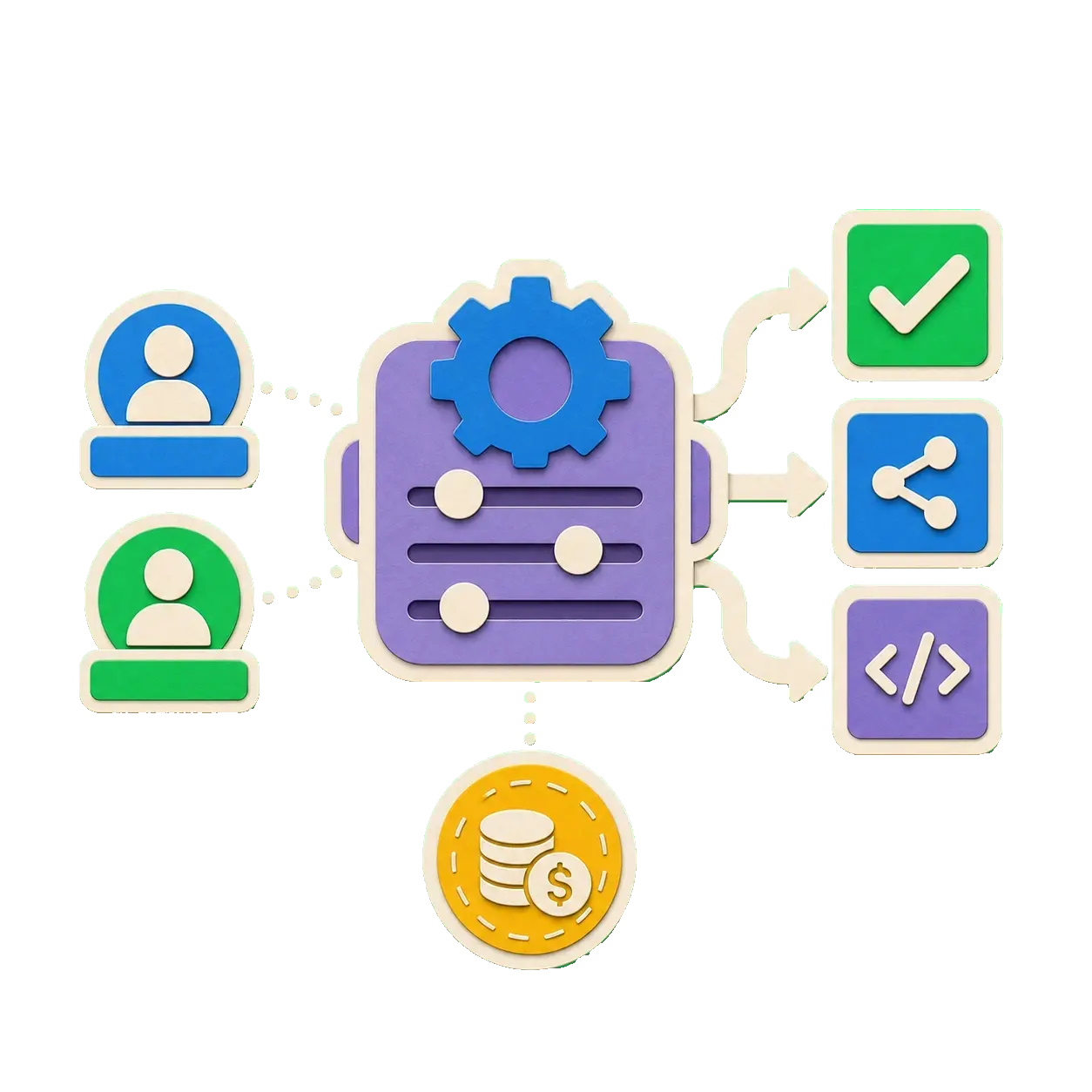
  • Now the admin can configure everything at the level of an individual project or for the company as a whole.
Paper-cut demo video screen with a script card, voice element, and presenter tile

A founder-led demo video

The best way to explain the product is to show it in action and talk through it myself. It takes three weeks to create, alongside bug fixing and real product testing.

  • The script goes through more than 100 iterations. Every line starts with AI and then gets polished by hand. Unexpectedly long, and unexpectedly interesting.
  • I use two fictional Jira companies as the demo playground: one about habits, one about cooking. Demo material needs real tasks, and along the way I find and fix dozens of small rough edges.
  • I deliberately use as much AI as possible to test the limits across different parts of the workflow. Avatar from HeyGen, voice from ElevenLabs based on an hour of recordings from two microphones, music from Suno. The delight comes only after 10 hours of trial and error on the avatar alone. Each tool has its own story.
  • The result is eight minutes, which I cut down to 5 minutes 40 seconds. Still very long, but it is the first real attempt.
Paper-cut insights milestone card with a version checkpoint seal and laurel

Insights: the product's big pivot

This is not a feature. It is a rebuild. Insights changes what the product is built around: a different result, a different AI stack, and a different way of interacting.

  • AI clarifies the task before answering, generates images, and searches the web. Search and images move over to Google.
  • Under the hood, the models are notably stronger. The quality of the output changes in a visible way.
  • Around 20 iterations over two months. A major change in the product's logic or appearance can now happen in a day. That only works when you know exactly what you want and your tools are not slowing you down.
Minimal paper-cut search-and-image card centered on a banana under one unified stack

Nano Banana 2 + Google web search

Search and image generation move over to Google, and the jump in quality is obvious right away.

  • Web search and image generation both switch to Google as the main provider.
  • Nano Banana 2 runs on top of `gemini-3.1-flash-image-preview`, and the image quality is on a completely different level from the previous providers.
  • Both tools now sit under one provider, which makes the stack simpler and the result more stable.
Feb 15Sun19 days
Paper-cut clarification stage with a question panel, option cards, and a final clarified result

AI asks questions first

Good AI asks before it answers. I knew that already, but the implementation used to feel too heavy. With coding agents, that is no longer true.

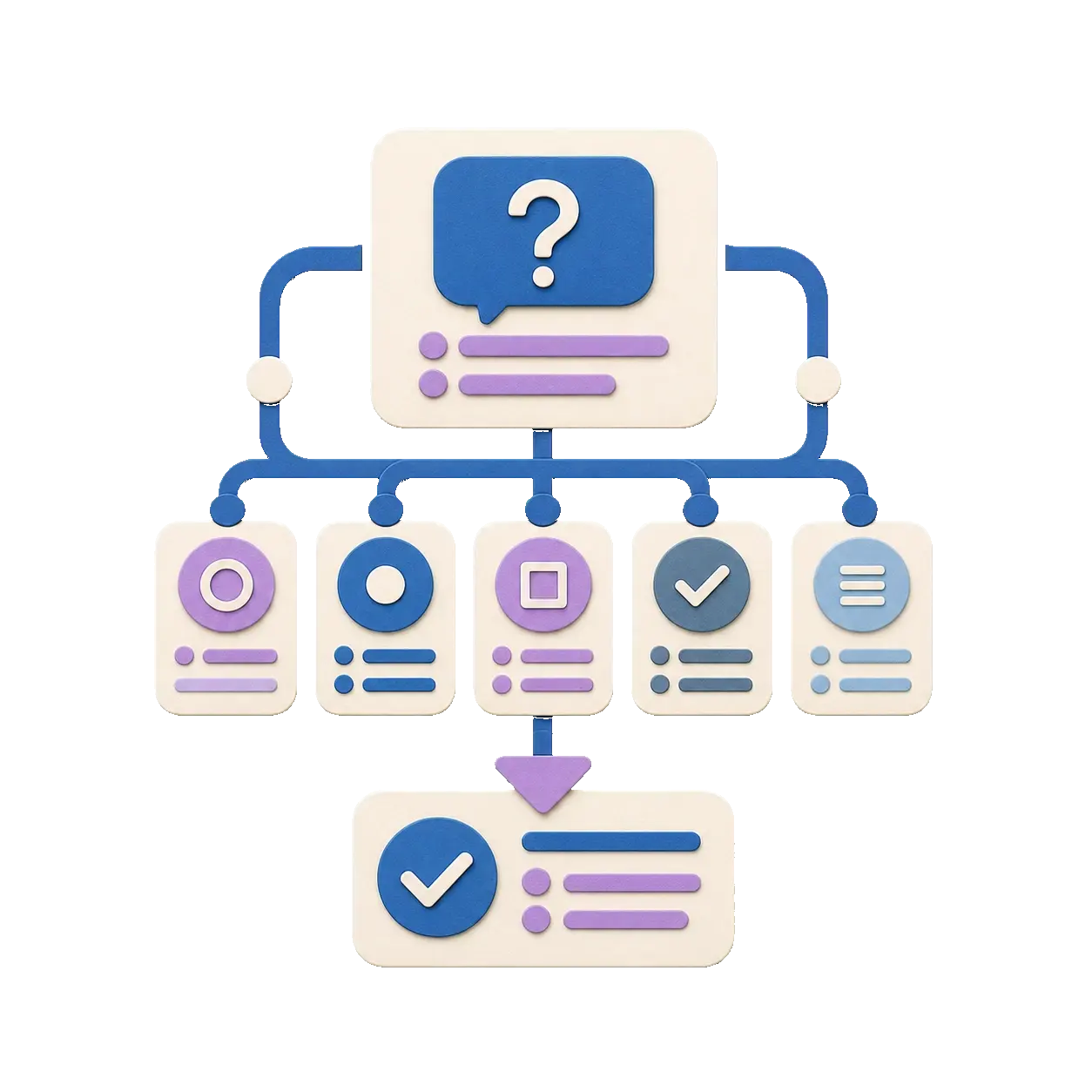
  • When Insights senses that a task may be underspecified, it opens a clarification stage: five questions about the non-obvious parts that can radically change the implementation. Checkboxes, radio buttons, free-form answers. And the loop can run again and again.
  • Less than two weeks from idea to several working iterations. A year earlier this would have triggered a small personal crisis.
Jan 27Tue2 days
Paper-cut product surface collapsing into one clear entry point and start doorway

The turn toward Insights

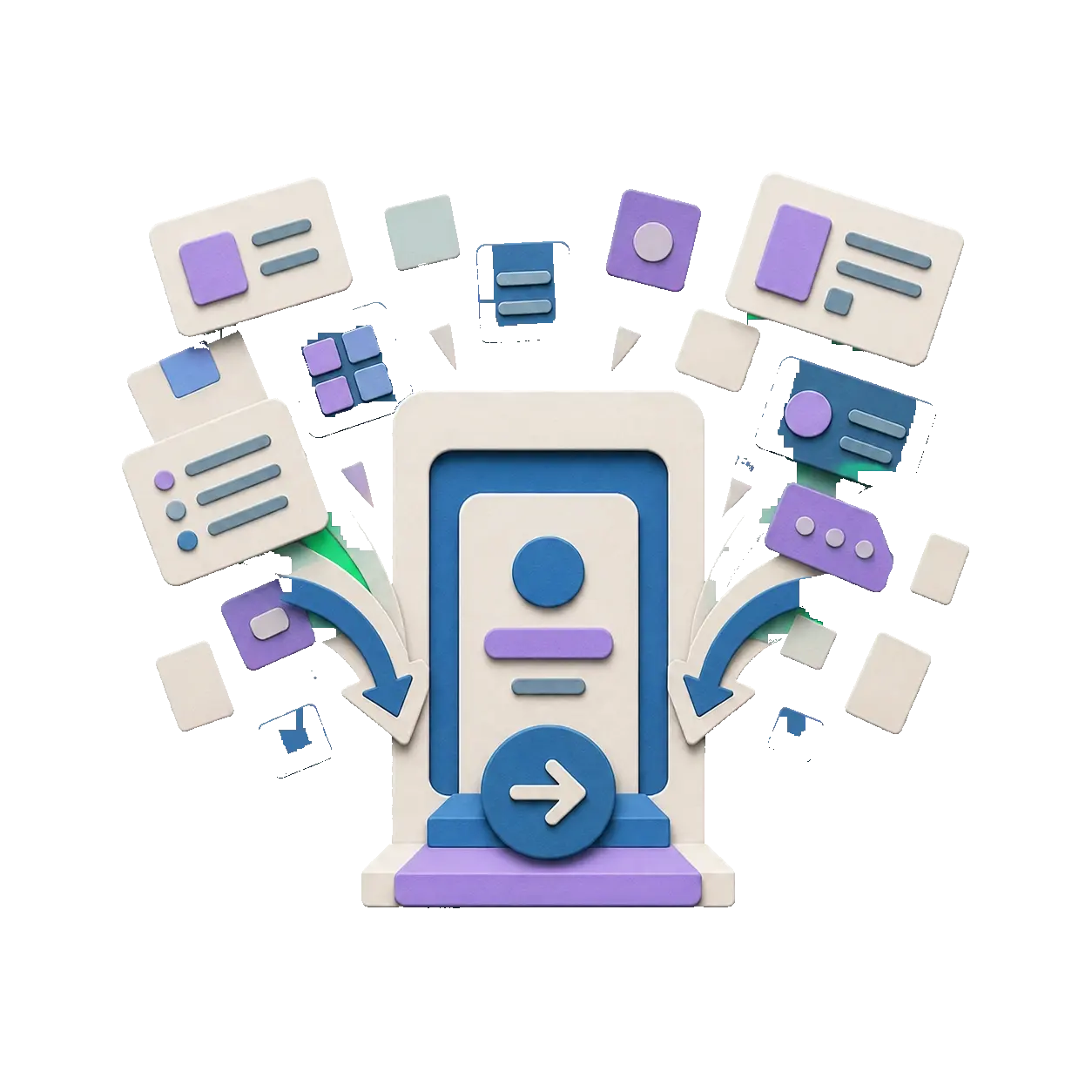
I spent a year building depth and ended up with something closer to an IDE. The data says people install it and never come back. So the decision becomes obvious: the product has to create value fast, not after five minutes of setup.

  • The era of shorts, reels, and Twitter logic is only accelerating. A product that unfolds too slowly already loses in that environment. Value has to show up immediately and in a form that is easy to digest.
  • That is exactly where the Insights plan comes from: a simpler first step, a stronger result format, and more proactive AI.
  • At this point it is still only a plan. It will take two months and around 20 prototype iterations before it becomes what it eventually becomes.
Jan 25Sun8 days
Paper-cut analytics dashboard with usage events, chart line, and a privacy-safe tracking shield

I start measuring real usage

Jira's built-in analytics were almost useless, and 2 to 5 organic installs a month did not feel like enough reason to dig deeper. But while preparing the move toward Insights, I decide to fix that.

  • I bring in PostHog and do it properly from the start: full compliance, GDPR support, no prompt collection, no content collection, no API keys. User corporate data should be untouchable. I should only see usage metrics for my own product.
  • Even with traffic this small, one pattern becomes clear: most users install the product and never actually enter it.
Jan 17Sat33 days
Paper-cut product core with a return path from a side branch back into one focused app

I return to the product

The work at hooh is over, and Just is ahead without split attention. But this is not a return to the old plan.

  • Half a year of parallel work is behind me. For the first time in a while, all focus is back on my own thing.
  • The key conclusion from the hooh period is blunt: a strong product can lose before a person ever reaches its core. Entry matters more than the engine.
  • Insights stops being a loose idea and becomes a concrete direction: repackage the product around a clearer entry point, a stronger result, and more proactive AI.
2025
Dec 15Mon44 days
Paper-cut AI core with user and assistant inputs, three output modes, and cached-token pricing

Three upgrades I had been missing for a long time

Explicit message roles, control over what flows between steps, and real pricing with cache taken into account.

  • Messages inside a step now have explicit USER, ASSISTANT, and SYSTEM roles, so context no longer has to be guessed.
  • A step result can be passed forward as a dialogue, as final output only, or cut off from the next step entirely.
  • For Anthropic and OpenAI, cached tokens and real price now appear right in the interface. In practice, that turns Just into a real LLM backend, the kind hooh had hired a separate person to build around.
Nov 1Sat45 days
Paper-cut sandbox tray with AI scenario cards inside a real company work setting

hooh becomes the proving ground

From November on, the plugin lives inside hooh.com and gets used in a real project. The first honest test outside demo data.

  • Inside hooh I use it as my own controllable AI builder, even though the original idea was for it to help with Jira tasks.
  • When I need to write Jira tickets, I still reach for ChatGPT because the habit is already there. My prompt is one or two A4 pages of half-structured thoughts about a feature.
  • In practice I am delegating the writing of the ticket to an assistant after handing over most of the detail. A big spec for a complex feature takes one or two hours. Just can do all of that too, just not as comfortably, and when there is a choice... well.
Sep 17Wed16 days
Paper-cut chain of independent workflow steps with symbols for reasoning, search, image generation, and Jira action

AI settings move down to the step level

Before this, the whole AI configuration lived at the scenario level: one provider, one model for everything. Now each step becomes independent, and that changes what the product can actually build.

  • Different steps can use different models. Claude for reasoning, GPT for generation, Gemini for search, all inside one scenario.
  • All templates move to the new scheme, and requirements get two new ones: a draft from the title and a list of key questions.
Paper-cut web search symbol with a globe and image card, surrounded by OpenAI, Gemini, and xAI provider marks

Two new step types: web search and images

I finally close one of the oldest gaps: scenarios can now go online and generate images as native steps instead of through workarounds.

  • Web search and image generation become proper step types alongside text and reasoning.
  • Both step types are available through three providers: OpenAI, Google, and xAI.
  • Jira actions become a separate step too, so issue fields can be updated directly from the chain.
Sep 1Mon14 days
Paper-cut symbol of an almost empty wallet with a small receipt slip inside

Full-time focus comes to an end

The money runs out. Product work becomes secondary, and the path back to full-time employment starts coming into view.

  • While interviews are still underway and no offer is signed yet, there is a narrow window left.
  • I use it to finish the major Claude Code update before switching context.
Aug 18Mon3 days
Paper-cut symbol inspired by the Claude Code logo on a coding panel with a clarifying question bubble

Claude Code changes how I code

Claude Code is not just faster. The quality jumps in places where I did not expect it to.

  • Before that I had used Cursor and AI plugins for JetBrains. They worked. But Claude Code changed both quality and speed at once.
  • The agent's clarifying questions lead to cleaner and more precise results than a one-shot prompt. That was genuinely surprising.
  • It was one of those moments when you fall in love with what AI can do all over again. If the earlier wave felt like the first space age, this one felt like the second.
Aug 15Fri8 days
Paper-cut symbol inspired by the Google Drive shape with a small blocking X badge

Google Drive hits verification limits

Google Drive was a strong integration that I never managed to ship.

  • File search and filtering, context from Docs and Sheets, images from Google Docs, comment threads: all of it worked locally.
  • Access to all files turned out to be too sensitive a scope for Google, and verification never went through.
  • I rolled the feature back without ever releasing it. A good experiment with a bad ending.
Aug 7Thu10 days
Paper-cut symbol of a small first landing page with supporting legal pages and a domain badge

The first landing page appears

Google demanded a real site, and that is how aiapps.me is born.

  • Google Drive verification required a domain, legal pages, and ownership confirmation. There was no way around it.
  • So I put together a minimal landing page: product description, policy, terms. Not really branding yet.
  • Sometimes a product site is born not from ambition, but from bureaucracy.
Jul 28Mon14 days
Paper-cut symbol of a small AI Jira plugin shipping fast, with auto-applied labels and a launch badge

Mini-hackathon: a plugin in four hours

Morning: idea. Evening: product live on the Marketplace.

  • This is Just: AI Auto Labels, a simple Jira plugin that uses AI to assign labels automatically.
  • The repo starts at 12:15. By 15:49, only small fixes are left. Code and testing take around two hours.
  • Most of the time goes not into code, but into packaging: logo, Marketplace page, and app setup.
Jul 14Mon7 days
Paper-cut symbol built around a stylized Grok-inspired mark with a few subtle outward rays

A fifth provider: xAI and Grok

xAI joins the stack, and it arrives together with a bigger wave of new models from everyone else too.

  • xAI enters with six models at once: Grok 4, Grok 3, Grok 3 Mini, Grok 3 Fast, Grok 3 Mini Fast, and Grok 2 Image for image generation.
  • o3-pro, Claude Opus 4, Sonnet 4, Haiku 3.5, Gemini Flash Lite Preview all land in the same update.
  • The gallery moves to Claude Sonnet 4, which becomes the default model for templates.
Jul 7Mon76 days
Paper-cut symbol of data moving from an older storage block into a structured SQL database

Storage moves to SQL

I finally solve a pain that existed from day one: data migrations without direct access to customer databases.

  • Forge does not give direct access to customer databases. Every schema update meant web triggers, custom runs, and workarounds. That had been true since the first version.
  • Forge SQL fixes the core issue: normal migrations and sane support for existing accounts.
  • The move touched the whole server side, and it took weeks of careful work not to break current users. Anyone who has ever migrated from NoSQL to SQL will understand.
Apr 22Tue6 days
Paper-cut symbol of a central model settings panel expanding into many model tiles, with a small image card below

Keeping up with the model race

Four models from OpenAI and four from Google land at once: eight additions in a single release.

  • o4-mini, GPT-4.1, GPT-4.1 mini, GPT-4.1 nano from OpenAI. Gemini 2.5 Flash, 2.5 Pro, 2.0 Flash, 2.0 Flash Lite from Google.
  • Model selection gets search and reset, so browsing old model names no longer feels like scrolling a junk drawer.
  • This also becomes the first step toward images: Jira attachment read access and the groundwork for generation.
Apr 16Wed1 day
Paper-cut symbol of a marketplace page feeding into an activation funnel, a demo video tile, and an active user

Install is not the end of the funnel

After LinkedIn it becomes obvious that the real problem is activation, not the channel.

  • The product's value has to become visible before the user closes the tab. That turns out to be harder than it sounds.
  • The working hypothesis is that the page needs a much clearer demonstration. Video would be perfect, but too expensive and too hard at this point, so I postpone it for a year.
  • This is the first real shift toward sales thinking: building is not enough, you also have to be able to sell what you built.
Apr 15Tue11 days
Paper-cut symbol of a paid campaign funnel with expensive traffic narrowing to a few installs

April in LinkedIn

A month of paid ads leads to a sober look at what is actually not working.

  • Five waves, more than 40 ad messages, audiences, and formats. The result: 12 installs for $1,300. Conversation ads did best at around $30 per install in the best campaign, but the overall outcome was still weak.
  • The biggest insight was structural: the buyer is not the same person as the future user. That breaks both targeting and messaging.
  • Three diagnoses emerge: weak activation, a weak marketplace page, and weak product framing. Plus one honest question: maybe part of the problem is LinkedIn itself and my own distribution skills. None of the 12 installs really stuck.
Apr 4Fri11 days
Paper-cut symbol of a cleaner everyday workspace with a chat panel, quick menu, and gallery card

Small upgrades, borrowed from ChatGPT

A modest release, but every change lands squarely in day-to-day use.

  • Chats now name themselves from the first prompt, like ChatGPT. No more faceless threads in the list.
  • Archived scenarios disappear from quick menus, which means less noise and fewer accidental launches.
  • The gallery gets a customer interview template, one more tool for real product work.
Mar 24Mon14 days
Paper-cut symbol of a crowned chat panel, suggesting Anthropic becoming the default winner

Anthropic becomes the new favorite

I test models against my own scenarios, and Claude 3.7 Sonnet unexpectedly wins across the board.

  • I add new Anthropic models and immediately make Claude 3.7 Sonnet the default.
  • The response quality is clearly better: more concise, more precise, and better at holding the scenario context. A free boost out of nowhere.
  • It is slower and more expensive than OpenAI, but once the result is that much better, that stops being a serious argument. From that point on, I have a clear favorite in the AI race.
Mar 10Mon48 days
Paper-cut symbol of grouped Jira issue cards gathered through a filter into one reusable context

Expanding context

Task groups become available too, for scenarios that need a wider view of what is happening in the project.

  • Tasks can now be pulled into context by sprint, release, label, status, type, or assignee.
  • That unlocks new templates on top: release notes, sprint reports, and next-step scenarios.
Jan 21Tue22 days
Paper-cut symbol of a gem-like model emblem over layered provider tiles

The big four

A fourth provider arrives: Google. Model choice finally starts feeling broad for real.

  • Gemini 2.0 Flash Exp, 1.5 Flash, and 1.5 Pro all become available inside the product.
  • OpenAI, Anthropic, Mistral, Google. At this point the product is no longer tied to any single player.
2024
Dec 30Mon2 days
Paper-cut symbol centered on the AdSpoiler mark with a small money-bag sale badge

I buy myself time

At the end of the year, I finally sign the sale of AdSpoiler. The deal had been dragging on since September, and it solved a very basic question: what exactly I was going to live on while Just still could not.

  • The money for development was running out, and so were my savings. A startup does not pay rent by itself.
  • AdSpoiler, my ad analytics service, had become a frankly toxic asset by then: not a growth bet, just dead weight. Luckily, I managed to sell it for decent money.
  • I split the sale with a partner, but my share was enough for roughly nine more months of startup runway. That became the plan.
Dec 28Sat29 days
Paper-cut symbol of a scenario folder opening into quick-launch cards with a play button

Quick launch appears

A faster start: from folder to run in two clicks.

  • A quick-launch window appears for scenario folders, with the right version visible immediately.
  • From the same place I can access the last run, settings, and restart actions.
  • Contexts move into a separate panel, and the interface gets cleaner.
Nov 29Fri30 days
Paper-cut symbol of an alternative AI provider entering the stack through a layered wind-like mark

A third provider: Mistral

Mistral is not there for collection value. It matters as a European alternative worth watching.

  • Mistral Large and Mistral Small get added.

  • A system trial appears too: $1 on every key by default, so people can evaluate the models without an artificial barrier.
  • The point is not variety for its own sake. The provider market is expanding, and the product has to be ready for that.
Oct 30Wed22 days
Paper-cut symbol of a document path being pulled back from a connected system

The Confluence path gets rolled back

Forge does not let one app work with Jira and Confluence at the same time, so I cut the path.

  • A single Forge app cannot talk to multiple Atlassian products at once. That is a platform limitation, not my choice.
  • Locally, with expanded permissions, it works. In the marketplace, it fails verification and does not pass.
  • If the rule is no third-party workaround, then the only honest path is to remove it. Frustrating, but clear.
Oct 8Tue4 days
Paper-cut symbol of a product card sending outreach toward a few user markers

First users

It is time to push the product outward, so I set a goal and start with the circle closest to me.

  • The concrete goal: 50 installs in one month.
  • In startup language this is FFF: Friends, Family, and Fools. Not the most demanding users, but the ones who give a product its first momentum.
  • Around 20 people installed the plugin, but every install came from a very manual and very pedantic process: weeks of personal conversations, explanations, and persuasion.
  • It was not an empty exercise. Some of them actually explored the product and gave feedback.
Oct 4Fri10 days
Paper-cut symbol of a workflow branching and looping through iterative retries

Work becomes iterative

One prompt, one answer starts fading away. Iteration enters the workflow.

  • Branching in chats means I can roll back and try another path without losing the earlier result.
  • Template versions add more control over what runs and how.
  • AI settings become more transparent, including model cost.
Paper-cut symbol of layered model controls with a reasoning dial and execution slider

Reasoning models

New OpenAI models bring the first real test of how flexible the architecture actually is.

  • Reasoning models become the new trend in AI, so skipping them is not an option. I add `o1-mini` and `o1-preview`, but they force an architectural rethink because different models now need genuinely different settings.
  • Model behavior parameters appear, which means configuration grows beyond choosing a model name.
  • Adding a new model takes about 15 minutes plus testing, and this is still before the era of coding agents.
Sep 24Tue78 days
Paper-cut control module symbol for Anthropic entering the product core with flexible execution settings

Anthropic as a second provider

Anthropic enters the product and forces me to rethink the architecture around it.

  • To support two providers, provider choice has to become a real entity inside the system. There is no way around that.
  • Provider key management appears inside the product itself.
  • The hard dependency on one AI vendor and one vendor-shaped architecture disappears. The product stops hanging on a single player.
Paper-cut symbol of distinct context sources becoming a structured system

Context becomes a system

Context turns into a system with types, sources, and configuration.

  • Before this, context was just text attached to a request. Now it can be a Jira issue, Confluence content, or arbitrary text, each with its own structure and logic.
  • Configuration appears at the level of fields and sources: exactly what to take, from where, and in what volume.
  • This is the moment when context stops being an add-on and becomes a first-class part of the product architecture.
Jul 8Mon70 days
Paper-cut symbol of reusable scenario cards packaged as ready-made runs

Templates for real work

Repeatable work in Jira starts turning into templates built around specific tasks.

  • Six templates at first: rationale, requirements, summaries, test cases, work plan, code.
  • Each template is a scenario with several steps, its own context, and its own model settings.
  • Breaking work into steps creates a more complete workflow and, in practice, gets better results than one giant prompt.
Paper-cut symbol of one focused project path held in front of blocked multi-project branching

One product, one board: the first hypothesis

A plugin that works across all of Jira means context has to depend on the specific project. That is hard, so I postpone it.

  • If a customer has several Jira projects, templates and contexts need to be split or synchronized between them. That is a large problem on its own.
  • So I make a working assumption: the target customer is a company with one product and one Jira board.
  • There are fewer of them, but the hypothesis is faster to test, and more honest than spreading myself thin too early.
Apr 29Mon60 days
Paper-cut symbol of an issue card primed by product, audience, and market context before the first AI reply

I start assembling context for AI

What should AI know before the very first question, and how do you even define that?

  • The first context set looked like this: Jira issue, project description, product glossary, role, competitors, data sources. Raw building blocks, but already enough to start carving out a place for product memory inside the AI.
  • Those blocks would change a lot later, but the core idea appears here: AI should not have to start from zero every single time.
  • Confluence was already connected as a context source here. Later that path had to be closed because of platform limits.
Feb 29Thu12 days
Paper-cut roadmap and flag symbol for the path to a real launch taking shape

One person, the whole product

I decide to test a personal thesis: one person with the right mix of skills can build a complete product.

  • Before coding agents, the solo path required a rare combination: product, engineering, design, and marketing. That mix happened to come together for me, and AI agents only lowered the threshold further after that.
  • I knew the threshold would drop sharply soon, and that my head start was small. But it existed, and I tried to use it.
  • Every action became a product increment. Communication overhead inside the team: zero. The first time in my life. It was an oddly joyful state, almost childlike, and it made me want to keep working more and more.
Feb 17Sat22 days
Paper-cut symbol for the first real product shape of Just

The product takes shape

There are entities, there is an interface, and the product starts feeling real.

  • The key entities are defined: chat, action, step, message, context.
  • Everything is built around real Jira tasks, not an abstract chat box.
  • The strongest scenarios are requirements, alternatives, and planning.
Jan 26Fri14 days
Paper-cut in-progress transformation symbol for the first product proof of concept

The first test: a prototype

January 2024. I needed to understand whether Forge was even the right technology for this. The simplest way was to test it in practice.

  • In two days I had a Forge plugin running, a project created, and the first modal with AI settings fields and message submission.
  • The first thing I checked was the important one: not just sending a prompt, but running a chain of more than one message in sequence. It worked.

  • API connected, key created, chains working. At that point it became clear that technically the whole thing was possible. What remained was to sit down and build it.
Paper-cut document branching symbol for choosing Jira and Forge on purpose

Embedding instead of building

This was the key decision: embed inside Jira instead of building a separate product around it.

  • Jira is already part of how teams work, so the point is not to change their habits, but to show up where those habits already live.
  • Forge takes over the infrastructure layer: deployment, auth, billing, logs.
  • That leaves me with the part that actually matters most: the AI logic and the user experience.
Jan 12Fri8 days
Paper-cut from-to system symbol for a product born from a test assignment

A product idea from a test assignment

While looking for work, a test assignment unexpectedly led me to a product idea I wanted to believe in for real.

  • During my job search, I prepared my own transformation proposal for Aqua, a software testing company, as my view on how a business like that could evolve in 2024.
  • The central idea was simple: do not duplicate infrastructure, move the product closer to Jira, where the workflow, the users, and the market already are. And of course, bring AI into it.
  • During the presentation itself, I said that if they were not going to build it, I would. A week later, on the day of the rejection, it no longer sounded like bravado, and I started building Just.

Jan 4Thu7 days
Paper-cut path-to-star symbol for a five-year AI vision

I write down my five-year view

January 2024. I write down two beliefs for myself and decide to build around them.

  • First: over time, personal AI assistants will outperform humans in a large share of day-to-day work. I wrote that down not as an observation, but as a bet.
  • Second: the human edge will last longest in vision and marketing. What we build and why still belongs to people. So does convincing others that it matters. AI will not replace that any time soon.
  • The early majority will need at least five years to move into AI-native workflows, and the later majority even longer. People are more conservative in their habits than they seem. That whole transition window is an opportunity for anyone building tools inside it.
2023
Dec 28Thu10 days
Paper-cut document and star symbol for testing whether AI can do product work

How close AI is to replacing a PM

December 2023 became the first serious test: I broke product work into parts and checked what AI could handle and what it could not.

  • The approach was simple: take real PM tasks such as competitor analysis or writing specs, and run them through AI as an experiment. Not a feeling, a test.
  • The result showed up fast: one prompt, one answer. No memory, no web. A meaningful part of the job just fell out. Competitor analysis without current data is not really analysis.
  • But the limitations also pointed to what would come next. It became clearer not only what was missing, but what direction the whole thing was moving in.
Dec 18Mon112 days
Paper-cut workflow chain symbol for a course sharpening product vision

It all starts with vision

A course on product vision in December 2023 was not really about the product yet. It was about the fact that without vision at the top of the hierarchy, everything below gets built blind.

  • The course laid the hierarchy out clearly: vision → strategy → goals → initiatives → releases → features → epics → tasks. Once you see it in action in big companies, it gets a little uncomfortable. You realize how much gets built blindly, including things you build yourself.
  • That led to an awkward thought: I already had a position on AI, but it was nowhere written down. Intuition is not vision.
  • So I sat down and made it explicit: where things are heading, what I believe, what I want to build, and why. Without that step, everything that followed would have felt far less grounded.
Aug 28Mon135 days
Paper-cut marketplace-like horizon symbol for seeing the Jira plugin market from the inside

Jira as a market

Until then, I had never really looked at Jira plugins as a market. Then I saw the numbers by accident and remembered the niche.

  • Not everyone gets to see real Jira Marketplace numbers from the inside. I got lucky: while working at Railsware on Coupler.io, I was close enough to the TitanApps plugin line to see the monthly reports.
  • The numbers were more convincing than I expected: a narrow Jira tool could make steady money without a huge audience or broad reach.
  • At the time I was thinking about a completely different product. But the conclusion stuck with me: if there is one thing almost every software team in the world has in common, it is Jira. And the market around it has been alive for a long time.
Apr 15Sat
Paper-cut symbol of an early follower taking the first steps toward an AI future

Early adopter

One real task at work was enough for AI to stop feeling like a novelty and start turning into a habit.

  • April 2023. ChatGPT had existed for only a few months. I was editing a Confluence page at work and asked AI to help with a paragraph, more out of curiosity than intent.
  • The answers were inaccurate, but already useful enough to try again. And then again.
  • Three months later AI was already part of my near-daily workflow. At the time, I still had no idea that this was only the beginning.