
Three Ways AI Enters Jira
Three routes. Same backlog. Very different experiences. Rovo, connectors, and Just all bring AI into Jira in valid but fundamentally different ways.

Three Routes, Same Backlog
There is no shortage of AI in 2026. The shortage is in knowing where to point it.
If your team runs on Jira, you have already felt the pull. Atlassian shipped Rovo directly into the platform. OpenAI and Anthropic opened connectors that let ChatGPT and Claude read your backlog. And a new class of Forge-native apps — Just among them — embeds AI into the issue panel itself, treating the Jira ticket as both the input and the destination.
Three routes. Same backlog. Very different experiences.
The temptation is to ask which one is best. That is the wrong question. The more honest one is usually: which of these actually fits the way our team works?
For some teams the answer is governed reach. For others it is frontier-model freedom. And for others it is one structured Jira workflow that can use the strengths of multiple providers without leaving the issue.
Route One: Rovo
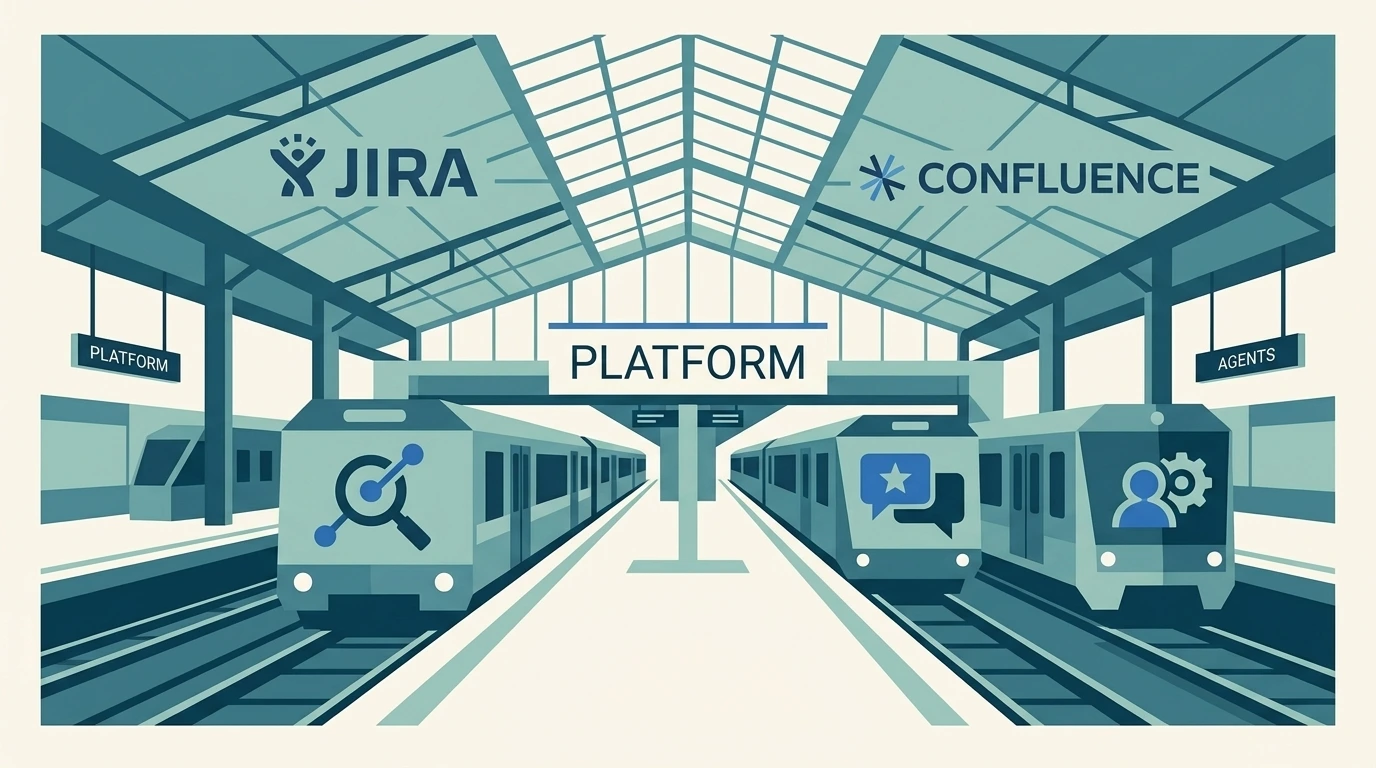
Rovo is Atlassian's own AI layer, woven into Jira Cloud, Confluence, and Jira Service Management. It draws on a Teamwork Graph that maps relationships between people, projects, and content across the Atlassian ecosystem, and it launched around three pillars: Search, Chat, and Agents.
- Strength: reach. Rovo Search pulls across Jira, Confluence, and a long list of third-party apps while respecting existing permissions, which makes it useful for teams drowning in scattered knowledge.
- Strength: simplest approval path. There are no provider keys, no model choices, and no token budgets to manage. Governance stays inside Atlassian's existing permission and audit model. Pricing is simpler now too: in 2026, Rovo is positioned as part of Atlassian Cloud plans rather than a separate add-on, with access and usage tied to plan level and allowances.
- Trade-off: less control and less issue-level depth. Model choice is locked, and the AI sits next to the work rather than inside a structured planning pipeline in the issue panel.
Rovo is the right route when the core problem is finding information across products and the priority is governed, zero-setup access.
Route Two: Connectors
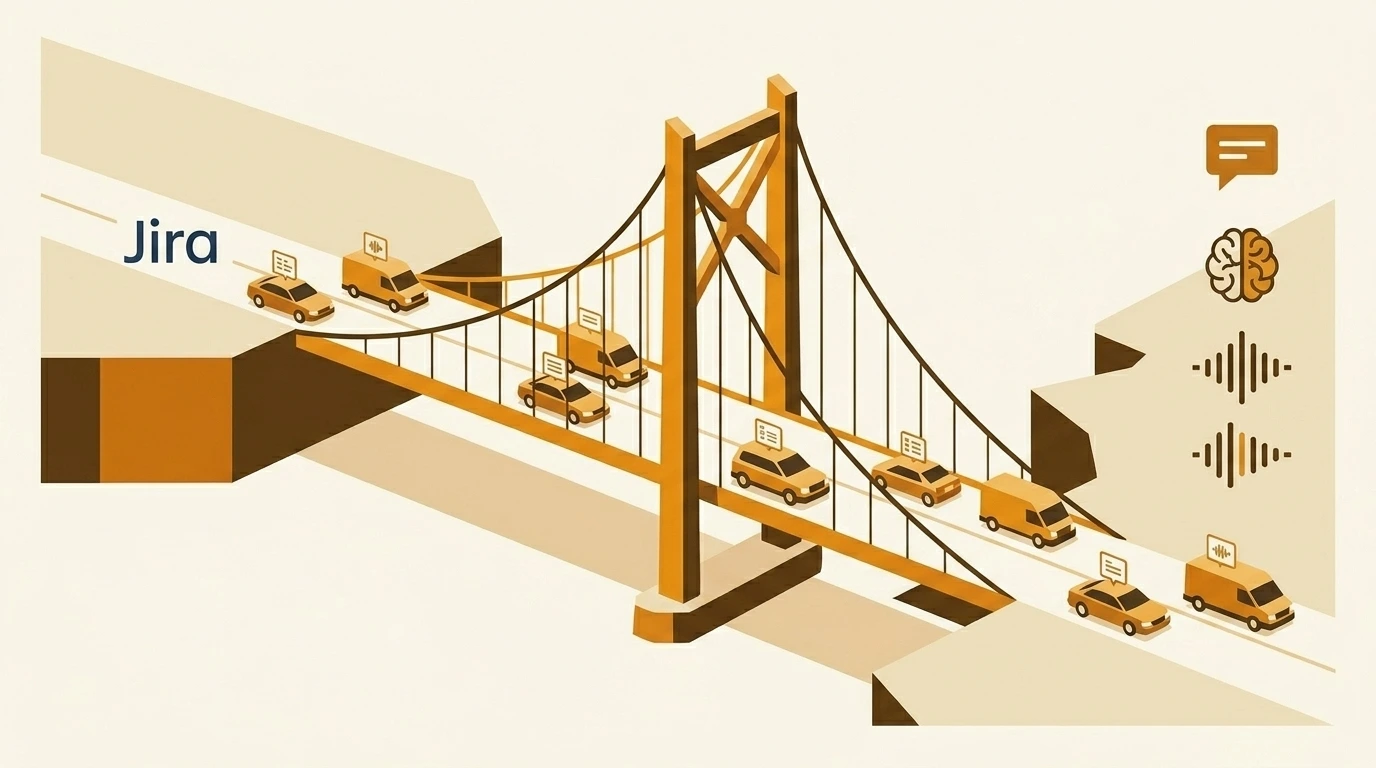
Connectors take the opposite approach. Instead of wrapping AI inside Atlassian, they bring Jira data to wherever the AI already lives - ChatGPT, Claude Desktop, Cursor, or any client that supports the Model Context Protocol (MCP).
- Strength: model freedom. They give you whatever the external client offers - today that means Claude Opus 4.6, GPT-5.4, Gemini 3.0 Pro, and whatever ships tomorrow.
- Strength: familiar client experience. That makes connectors attractive for power users who already live in Claude, ChatGPT, or Cursor and want frontier models without learning a new interface. The modern version of this bridge increasingly runs through MCP: the client connects to an Atlassian or third-party MCP server, discovers Jira tools, and uses them inside the chat.
- Trade-off: the user becomes the integration layer. Context stays shallow unless someone keeps pasting it in, write-back is possible but rarely structured, and each conversation usually stays private to one client. Authentication can be clunky too: Atlassian's official MCP server uses OAuth, and many teams end up adding a third-party managed connector to smooth the experience out.
Connectors are the right route when the core problem is getting Jira context into a powerful external AI and the user values model flexibility over team workflow.
Route Three: Just
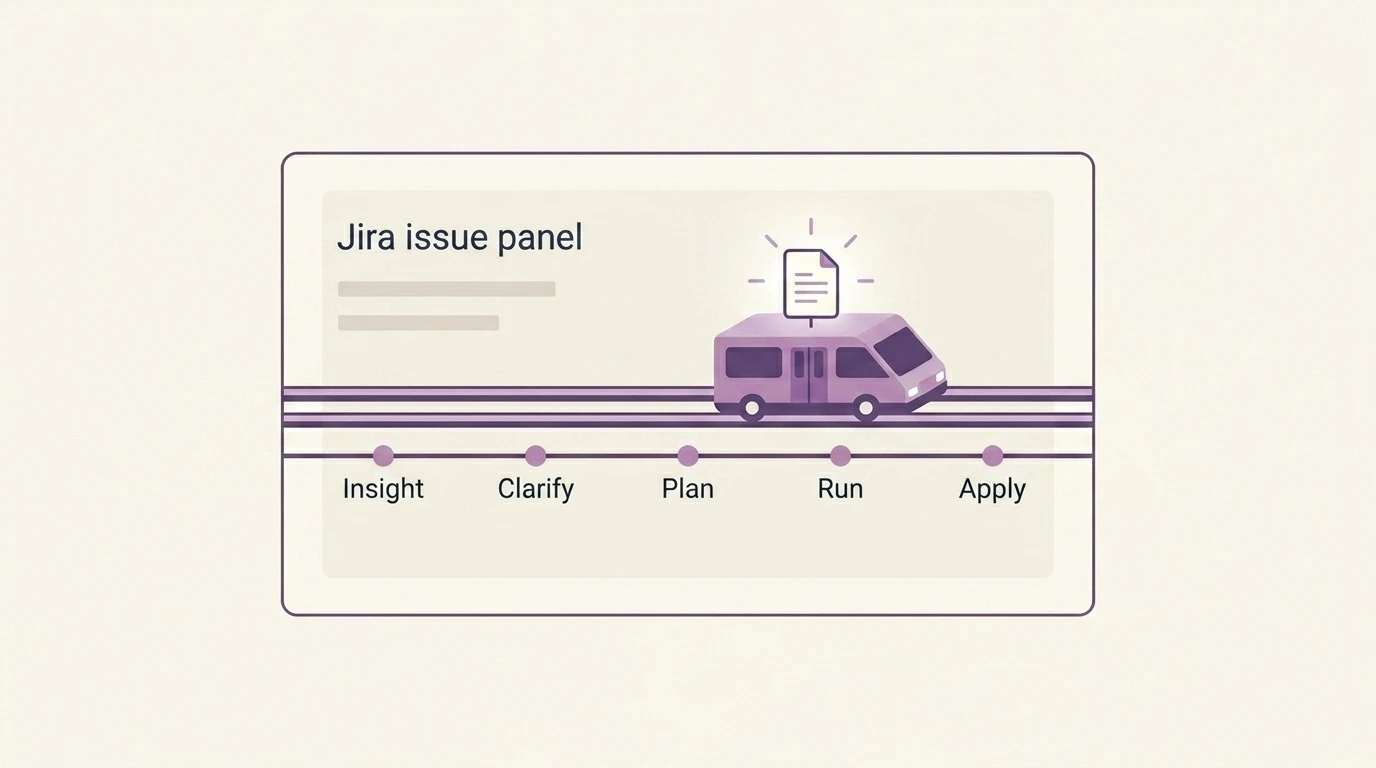
Just takes a third path. It is a Forge-native Jira app that embeds the AI experience directly into the issue panel - not as a chat sidebar, but as a structured lifecycle: insight generation, clarification, planning, execution, and apply-back to Jira fields.
- Strength: workflow depth. The AI lives inside the ticket, not in a separate client, and the issue becomes both the input and the destination.
- Strength: one Jira-native system that can combine providers. Instead of a single prompt-and-response, Just runs a structured lifecycle: insight, clarification, planning, web research, image work, execution, and apply-back. Each step can be enabled, skipped, or reviewed before it touches Jira. Because it is multi-provider by design, teams can route different steps to different models and combine reusable project context with visible execution, token usage, cost, and feedback loops inside one system.
- Trade-off: more setup and platform constraints. Just does include built-in trial keys to get started, but the long-term model is pay-as-you-go with your own provider keys. That means a slightly more advanced setup: someone on the team needs to connect, create, and manage API keys for the organization. It is also a better fit when AI usage varies sharply across the team, because you are not forcing the same flat seat cost on everyone. I break that budget trade-off down in more detail in The AI Budget Nobody Talks About. As a Forge app, it also still operates within Atlassian runtime constraints.
Just is the right route when you want the strengths of multiple AI providers inside one Jira-native, reviewable workflow — and you are willing to do a bit more setup to get that control.
The Real Difference: Where the AI Lives
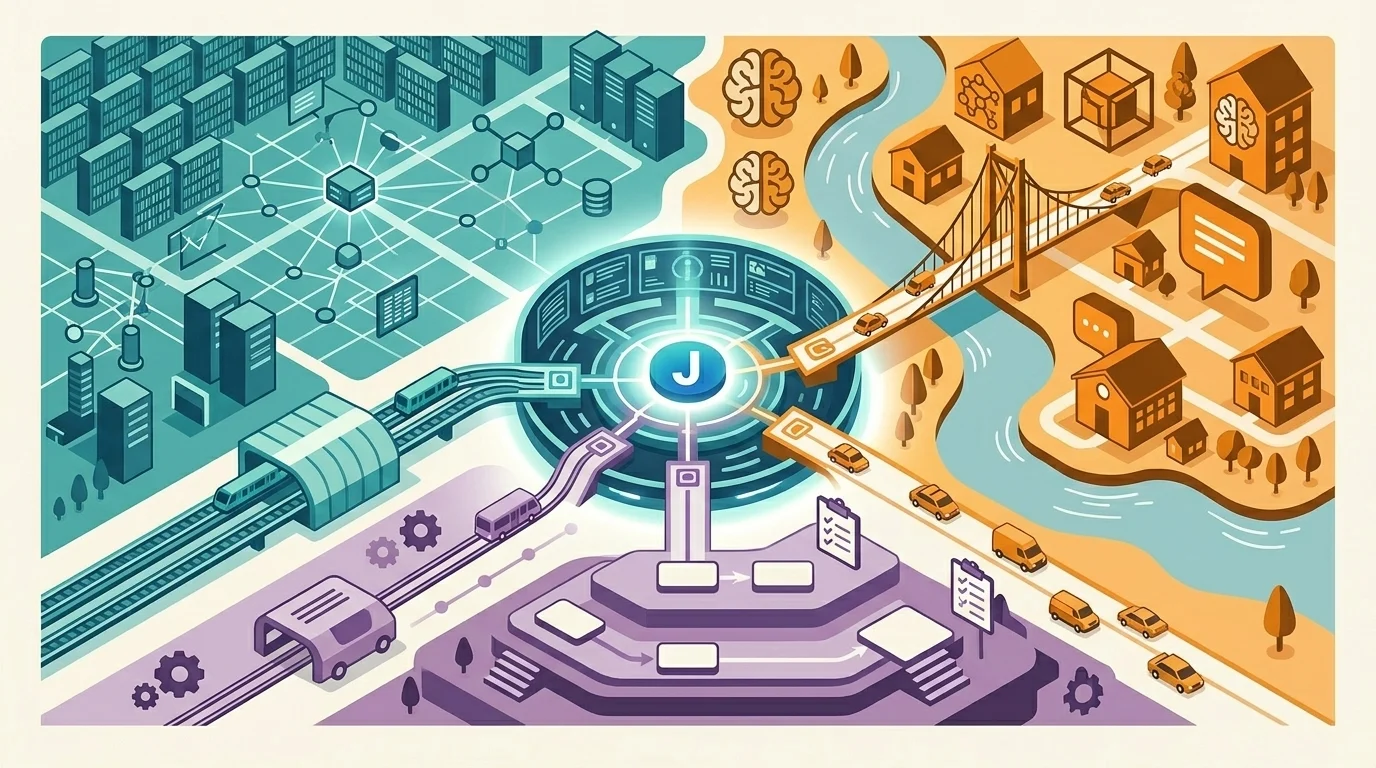
If you strip away the feature lists and reduce each route to its essence, the distinction is architectural.
Rovo is the metro system. It covers the whole city. You can get from Jira to Confluence to Google Drive in one ride. The routes are fixed, the schedule is managed, and you trust the operator.
Connectors are ride-shares. You pick the vehicle, you pick the driver, and you go exactly where you want. But you supply the directions, the ride is private, and nobody else on your team really sees the full trip.
Just is the dedicated shuttle route. It runs one corridor - the Jira issue - but it runs it with stops, review points, and transparency. It can also switch providers across the route without making the team leave Jira. Everyone on the team can see where the shuttle is, what it is carrying, and when it arrives.
Route Map Summary
If you compress the whole comparison down to its essentials, the contrast becomes simple enough to read at a glance.
| Dimension | Rovo | Connectors | Just |
|---|---|---|---|
| Lives | Atlassian platform | External AI client | Jira issue workflow |
| Best at | Cross-product knowledge | Frontier model freedom | Multi-provider execution inside Jira |
| Shape | Search, chat, agents | Open-ended conversation | Guided, reviewable lifecycle |
| Shared visibility | High | Low | High |
| Model control | Atlassian-managed | Highest individual freedom | Team-controlled per step |
| Main trade-off | Locked model choice | Fragmented context and write-back | More setup and key management |
That is the decision in its cleanest form: governed reach, personal model freedom, or one structured Jira workflow that can combine the best parts of multiple providers.
Choosing Your Route
No single route is universally correct. A team that needs to search across six SaaS products and wants zero infrastructure overhead should start with Rovo.
An engineer who wants Claude Opus 4.6, GPT-5.4, or Gemini 3.0 Pro reasoning over a backlog from their own client should reach for a connector.
A product or delivery team that wants one reviewable Jira workflow where different steps can use different providers - and where cost, quality, and output stay visible to the whole squad - should look at Just on the Atlassian Marketplace.
Many teams will use more than one. The routes are not mutually exclusive. The important thing is to choose deliberately, based on how your team actually works and where the friction really is, not on which AI demo looked most impressive last week.